Showing posts sorted by relevance for query video. Sort by date Show all posts

Wednesday, April 30, 2014

How To Stop Your Dog From Chewing The Leash

Be the first to comment!

How To Stop Your Dog From Chewing The Leash? Does your dog have the habit of chewing on the leash incessantly? Have you exhausted all options of getting him/her out of that habit? If that is an aspect of your pet's behavior that you've been struggling with, you can get a few highly actionable tips from the video below.

This video gives an effective tip on how to stop your dog from trying to show you that it’s in charge. If you have a dog that’s constantly biting, chewing and pulling on the leash, then try this technique and start enjoying your walks again!


If you like this video and found it useful, you will certainly like Doggy Dan's way of traininig dogs. Make dog training supremely fun, highly effective and ultra-fun by learning it from one of New Zealand's most trusted and leading dog experts. Learn more about this highly recommended doggie training video membership program  HERE.

The important points here are:
1. Be gentle with very young puppies
2. Be confident and sure with older ones.
3. Set them up to win while not giving them too much attention.
4. Repeat this and see if it helps. If not, try isolating the dog for a few hours. Just like a child's time-out, the puppy will learn to differentiate bad behavior from good.

All this while you'll need to remain calm and considerably detached. Use low energy and remain firm.

Learn more effective and actionable puppy training tips.
read more...

How To Keep Your Dog Out Of The Kitchen

Be the first to comment!
How To To Keep Your Dog Out of The Kitchen? If you are also looking for answers to this very problem, then you are not alone. Many dog owners complain whatever they do they are unable to keep their dogs out of the kitchen. If that is an aspect of your pet's behavior that you've been struggling with, you can get a few highly actionable tips from the video below.


Keeping your dog out of an area:

If you follow the simple steps below then keeping your dog out of an area by using a simple command should not be a complicated process.

  1. Make it clear – Here is a straight shooter tip. Be clear about what you want from the dog - only to the dog or pup but also to yourself. Right! You'd be surprised to know how many people keep moving the goal post which only ends up confusing the dog.
  2. Use tape to make the line clear – Use a tape or baby door to demarcate the area, for both of your benefit.
  3. Train your dog what you want – It won't happen at once, and in some cases it won't happen even for a while. Be patient and keep at it.
  4. Choose a word then practice – You can use clear commands or treats or a combination of both. Dogs like children, are best known to their parents.
  5. Isolation – If your dog has learnt the word but is insisting on being disobedient then you can always use The Everyday Isolation Technique to isolate them when they set foot in the area. This is kind of like the time-out common for truant kids.
  6. Use as little energy as necessary – Try to stay as calm as possible and move your back over the line that you are asking with as little fuss as possible but making it clear and immediate
  7. Avoid eye contact – Remember to avoid eye contact as this actually calls your dog over to you
  8. Consistency – Be consistent and firm. Don't confuse the dog by occasionally bypassing your own rules.
  9. Try to set your dog up so that it is able to see you – If you try to set your dog up where they are unable to see you then it is much harder. Whilst this is possible you should take your time trying to reach this level – remember Step By Step!
Training your dog to stay outdoors:
As with the above you will train your dog the same way except for when your dog is allowed in and you say the release command such as the “OK Command” or “Inside”.

If you like this video and found it useful, you will certainly like Doggy Dan's way of training dogs. Make dog training supremely fun, highly effective and ultra-fun by learning it from one of New Zealand's most trusted and leading dog experts. Learn more about this highly recommended doggie training video membership program HERE.

The important points here are:
1. Be gentle with very young puppies
2. Be confident and sure with older ones.
3. Set them up to win while not giving them too much attention.
4. Repeat this and see if it helps. If not, try isolating the dog for a few hours. Just like a child's time-out, the puppy will learn to differentiate bad behavior from good.

All this while you'll need to remain calm and considerably detached. Use low energy and remain firm.

Learn more effective and actionable puppy training tips.
read more...

Friday, September 4, 2015

[VIDEO] How Your Dog Can Protect You Before You're Born

Be the first to comment!
Do you know that your dog or cat can protect you from diseases even before you are born? Here is a video that explains (along with some adorable animation) how this happens.


According to researchers the drool and dirt brought in by these pets can have a beneficial effect on the unborn baby of the house. The immune system of the baby is still developing while in-utero and having pets around can be beneficial in these times when most western houses are so spick and clean that it misguide their immune system and trains it incorrectly. The result is a lifetime of allergies. See this video to see how this happens.


read more...

Tuesday, April 29, 2014

How To Stop And Redirect Your Dog From Chewing On Everything

Be the first to comment!
How To Stop And Redirect Your Dog From Chewing On Everything In Sight? Do you always fear that your dear doggie will chew on your favorite pumps or your brand new furniture? If that is an aspect of your pet's behavior that you've been struggling with, you can get a few highly actionable tips from the video below.

As we all know that just like babies, puppies too love to chew .. on everything. Just like children, there need to be clear boundaries defined for your pup if you want him to be a self respecting, non-chewing dog. Again, just like children you will need to keep your calm and get about it in a no-nonsense way. One thing that you'll need to make sure is that you don't let the dog take control of the situation by becoming the center of attention.


If you like this video and found it useful, you will certainly like Doggy Dan's way of training dogs. Make dog training supremely fun, highly effective and ultra-fun by learning it from one of New Zealand's most trusted and leading dog experts. Learn more about this highly recommended doggie training video membership program  HERE.

The important points here are:
1. Be gentle with very young puppies
2. Be confident and sure with older ones.
3. Set them up to win while not giving them too much attention. Redirect using a chew toy.
4. Repeat this and see if it helps. If not, try isolating the dog for a few hours. Just like a child's time-out, the puppy will learn to differentiate bad behavior from good.

All this while you'll need to remain calm and considerably detached. Use low energy and remain firm.

Learn more effective and actionable puppy training tips.

read more...

Monday, September 28, 2015

[Video] Dog Shows Amazing Love, Save Child From Father's Abuse

Be the first to comment!
I promise you, this will be the best thing you see all day today. Watch the video to see this amazing dog going all the way to protect the child from mock-abuse of father. In order to record the dog's amazing behavior, an 8 year old boy's father acts like he is scolding, abusing and is about to hit the child (which he's not doing and the child understands that this is all make-believe because you can see the child smiling throughout the video). The dog, thinking that the abuse is real, tries his very best to protect the child from the abuse and hurtful words.

See this and laugh away.


read more...

Thursday, January 22, 2015

[Video]Russet attempting to get her Christmas present out the door...!

Be the first to comment!


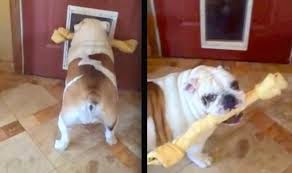
Russet is a 3 year old female English Bulldog. She is single and looking for the right guy (preferably same breed- no chihuahuas please). She enjoys napping, destroying furniture and eating treats. Contact the video publisher via YouTube link if you have a good match in mind.

WATCH VIDEO BELOW ...

read more...

Tuesday, April 29, 2014

Learning the Calming Signals of Dogs

Be the first to comment!


Dogs use their body in order to communicate everything. Their intentions and emotions are usually plain as day to long-time loving owners. Just like a treasured child, the dogs don't need to spell out their desires - they are understood by their "parents" without any words. Of course, this God gift comes in handy because dogs don't have huge vocabularies to express themselves.

Calming signals are signs that dogs use to convey their friendliness or the fact that they are not a threat. Just like the common tail wagging is a well known signal for human-friendly dogs.There are several calming signs that the dogs use in order to convey to the other dog that they are not a threat.

Some of these signals are:
  • Sniffing the ground
  • Avoiding direct eye contact
  • Looking away
  • Turning their back and walking away
  • Yawning
It is important that you understand what your dog is upto when he sends out these signals to another dog. Just because he/she is giving off calming signals does not mean the other dog either understands them or is going to take any notice! The very fact that they need to be given should alert you that the other dog is not calm. Be warned!


If you like this video and found it useful, you will certainly like Doggy Dan's way of training dogs. Make dog training supremely fun, highly effective and ultra-fun by learning it from one of New Zealand's most trusted and leading dog experts. Learn more about this highly recommended doggie training video membership program  HERE.

The important points here are:
1. Be gentle with very young puppies
2. Be confident and sure with older ones.
3. Set them up to win while not giving them too much attention.
4. Repeat this and see if it helps. If not, try isolating the dog for a few hours. Just like a child's time-out, the puppy will learn to differentiate bad behavior from good.

All this while you'll need to remain calm and considerably detached. Use low energy and remain firm.

Learn more effective and actionable puppy training tips.
read more...

How To Help Your Dog Learn How To Swim

Be the first to comment!
While there will always be dogs who will take to water like the fish, you will also see those that hate swimming. Some try and see to fail repeatedly while some don't even find the need to try.

As a friend and guardian, it is your job to teach your dog how to swim and a few tips and a little guidance from an expert can go a long way towards helping you reach your goal.


If you like this video and found it useful, you will certainly like Doggy Dan's way of training dogs. Make dog training supremely fun, highly effective and ultra-fun by learning it from one of New Zealand's most trusted and leading dog experts. Learn more about this highly recommended doggy training video membership program  HERE.
The important points here are:

1. Make sure that your dog is safe and is not going to get into trouble or have a bad experience.
2. Try to ensure he has a fun time and doesn't get too scared when he goes in for the first time.
3. Give the dog his/her own time and let them learn at their own speed, not at yours!
4. Stay calm and relaxed. Try not to keep calling your dog!
5. Let him build his own confidence. You can boost his encourage him by wading into the water yourself. Do not lead the dog into the water using a leash.  
6. Don't rush him because that way you'll scare him. The dogs know their own pace very well, let them work through even if it takes weeks or even months.
Not all dogs are naturally good swimmers:
The following dogs can all struggle:
       
       >> Heavy boned dog
       >> Very large breeds
       >> Muscle bound dogs
       >> Some dogs with very thick coats can also struggle.
All this while you'll need to remain calm and considerably detached. Use low energy and remain firm.

Learn more effective and actionable puppy training tips.
read more...

Monday, September 28, 2015

[VIDEO] Amazing Dog Tries To Save Fish

Be the first to comment!

Here is a video that will make you sad and feel ashamed at the same time. We call ourselves human but do we do enough to help those around us?

This dog has more humanity than us humans! Just see what he does! It will melt your heart :'(

Dog with a heart of gold, and what's even better is that he/she is trying to save food!


read more...

Sunday, December 28, 2014

VIDEO - Puppy dances and jumps for joy at the sight of its owner

Be the first to comment!


It isn't for nothing that people say that puppies are like little children. This puppy spots its owner and starts to jump around excitedly. The dance that follows is nothing short of heart-achingly hilarious.


WATCH VIDEO BELOW ...


read more...

Monday, July 13, 2015

[Video] Canismo Paints Beautiful Portraits Of Paint And Dogs

Be the first to comment!
Here is a collage of my favorite doggie pics and videos. These are excerpted from online sources or from my other articles on this site or elsewhere. If you happen to love any of these as much as I do, please do leave a comment to show your love to these cute things and support to my blogging efforts.

Here are some shelter dogs who have redefined modern art. The movement called Canismo is using art to support and promote the adoption of shelter dogs. Using animal friendly paint, the creators of this video helped these dogs create18 unique masterpieces that surely rival the Jackson Pollocks sitting on museum walls. Here is an excellent example of art in action.


The imagery used is a deep metaphor for the struggle facing sheltered dogs, from overcrowding to breed prejudice. "The shake of the paint reveals a remarkable exercise of freedom, where each drop of ink bears the stain of prejudice. The combination of different colors in the paintings shows the mixture of breeds, as random and as beautiful as each mongrel dog."
read more...

Thursday, January 22, 2015

[Video] 9 Dog Facts That Will Make You Live Forever.

Be the first to comment!


If you don't already know these facts, you ought to know them. Some of them are funny too. But they will just make you want to hug your dear 4 legged companion.

WATCH VIDEO BELOW...

read more...

Thursday, August 27, 2015

Tips To Deal With Your Dog's Behavioral Problems

Be the first to comment!
Dogs have many behavioral problems, it is not related to a specific breed, but they are general problems that are found in many dog breeds.

Here are the most important 12 behavior problems that dogs are facing.

Dog's behavioral problems

1-Digging

All Dogs like digging, but actually you need to let your dog stop doing these actions. You need always Say “no” and refuse letting him digging, you can get him a toy instead. You can make a small trick to let your dog happy. Bring a sandbox and bury in it some toys, then give it to your dog to dig and you will see how happy he will be when he finds his toys.

Dog's behavioral problems

2-Chewing

Dogs, especially puppies, are always trying to discover the world around them by chewing the things they saw around them, though chewing calm dogs but sometimes they chew wrong things like shoes and sock. They may harm themselves by swallowing socks by mistake. So, you have to buy chew toys and give them to your dog.

Our video here can help you train and redirect your puppy. Follow these tips from expert trainer to rid your dog of this annoying habit.

3-Begging

You have to train your dog to eat either on his crate or to go to a special place to sit while you finish eating. Don’t let your dog sit with you on the table to eat to avoid teaching him begging


4-Not coming when called

Always motivate your dog when she comes to you, whether you called or not. By this way you will train and teach her to come to you when called. Don’t only call her by her name but always follow her name by the command you want like “come” and “here”.


5-Pulling on the leash

What is more important to be done with dogs is to teach them to walk calmly beside you, always keep the leash short and loose. Stop walking when feel it is tight and don’t pull him and he will also stop to see why you are not moving. When your dog returns back to you reward him and start moving again. This way will teach him that pulling gets him nowhere

 Dog's behavioral problems

6-Separation anxiety

You have to train your dog that leaving him home alone is not a big problem. if you found teach your dog that you will always come back home in order not to let him upset. At the beginning don’t leave him more than 5 or 10 minutes and give him a chew toy in order not to feel bored, you can also turn on the TV or the radio to feel that everything is still the same as if you are at home. Always be calm when going out and when returning to let him feel that being alone is not a big deal.


7-Whining for attention

If you pumper your dog while whining so, are teaching her that this way works. You have to ignore her by leaving the room or folding your arms and look away as if you are not listening. Play with her and reward her when she is not whining.

 Dog's behavioral problems


8-Barking at the door

If your dog is barking because he is waiting to be greeted, so you have to teach him to behave well and park by picking a spot within sight of the door and train him to lie down and stay till you say ” go to your spot”. This training will keep your dog calm and learning to stop barking to be greeted


9-Jumping

Dogs used to greet people by jumping, but actually it’s a bad greeting way. If you want to greet a dog so you have to wait till you see his front legs on the ground. You may also ask him to sit, and when he obeys you, go and pet him. You have to teach your dog to control his own emotion by these ways.


10-Biting

Dogs always bite when they are afraid or nervous so, you have to let your dog socialized and get acquainted to people. Always walk with her around to feel safe and trust people


 Dog's behavioral problems

11-Agression

Nervous and afraid dogs are always aggressive, if your dog is a always in a bad mood and nervous temper so, you have to visit a specialized vet who can train your dog to be relaxed and be healthy and to also be able to deal with you calmly. Never leave aggressive dogs with children

Our video here can help you learn how to calm your dog using a few calming signals. Check it out to see if our expert's advice works for you.


12-Barking all the time

Some dogs like to bark at anything and others bark when they feel depressed, don’t shout at your dog when he barks because it may make it worse. Obedience training is the best way to avoid your dog being depressed. It is better to work with a specialized trainer.

 Dog's behavioral problems

Article/image source: urdogs.com
Product endorsement and links are not part of urdogs.com original article. 
read more...

Sunday, December 28, 2014

VIDEO - Pug, Barry Enjoys A Cool Bath

Be the first to comment!


Dogs aren't the biggest fans of baths, but the heatwave in Australia had this little doggie enjoying the bath thoroughly. So here's Barry the pug in the tub!


read more...

Monday, December 29, 2014

Cynophobia – The Fear of Dogs

Be the first to comment!
Cynophobia (from Greek κύων kýōn, meaning dog and φόβος phóbos, meaning fear)is an unusual fear of dogs. It is a subtype of Zoophobia, or animal phobia. A good 36% of zoophobic people have sought treatment for their fear of dogs and cats. One would think that dogs being arguably the most common pet and a very friendly animal would have fewer humans scared of them, but in fact the number of cynophobic people is pretty high. Though a greater number of animal phobic people have reported to be afraid of snakes and spiders, the fear of dogs amongst the population is a greater reason of concern because the presence of a dog in every person’s daily lives is pretty high. Even these people who are extremely afraid of dogs are forced to deal with them every day in some form(even if by avoidance), because our canine friends are pretty much everywhere.


Symptoms

The symptoms of a Cynophobia are pretty much as expected. When the patient comes in close proximity of a dog or in few cases even when the person sees a photograph or thinks about the dog, a panic attack can get triggered. This may include few or all of the following symptoms:
  •     Trembling
  •     Palpitations
  •     Sweating
  •     Nausea
  •     Difficulty breathing
  •     Increased heart-rate
  •     Urge to escape
  •     Dizziness
  •     Faintness
  •     Dry mouth or a choking sensation
  •     Emotional distress
  •     Light headedness
  •     Panic  attacks
 For patients of Cynophobia, the symptoms may occur when they are confronted with a dog, or even when they see a photograph or video of a dog. Sometimes this fear can surface even when the patient is merely thinking about dogs. This can be a real problem and can make life impossible in a world where dogs are considered to be man’s best friend. Treatment should be sought as early as this phobia is recognized or reported. Effective behavioral therapy can ensure that the patient recovers completely and is able to coexist with non-violent and friendly dogs without panicking.  

Treatment


The treatment is approached in either of the two following methods.


Systematic Desensitization Therapy


This kind of therapy aims at helping the patient deal with the fear and the manifestation of the object of fear (irrespective of the manifestation being real or imaginary). The therapist first determines the anxiety level of the patient and then trains and coaches the patient to deal with the seemingly threatening situation through breathing exercises and other techniques that relax their minds and senses. This is continued unless these relaxation techniques are internalized and the patient doesn’t show symptoms of fear when placed in situations where fear was experienced previously.


In Vivo Or Exposure Therapy


As the name indicates this kind of therapy involves exposing the patient to the dog in a controlled and systematic environment. These sessions can all be prolonged or can be increased in time duration increasingly with passing time. Additionally, the sessions can be conducted separately or in a single multi-hour session. The feared stimulus (which in case of Cynophobia, is a dog) is brought in presence of the patient while another person demonstrate a less anxious and more “normal” way of interacting with the dog. This behavior modeling can encourage the patient to gradually lower his or her defenses against the feared animal and start interacting with the dog once the anxiety level decreases significantly. After several sessions, when the therapist is convinced that the patient can be left to his own devices, the patient is encouraged to interact with dogs without the therapist being present.  This therapy has been found to be really effective and as many as 90% patients have shown significant signs of improvement and recovery just after 2-3 net hours of sessions. Patients who may assess themselves to be milder cases of Cynophobia or who are hesitant to seek professional help can start self help treatment. An assistant or a friend can help immensely and starting off with a cute looking, harmless and physically unintimidating dog can be good. Later on the labs can be brought in. Since avoidance itself may help perpetuate or reinforce the fear, the patient is advised to continue interaction with the furry, four legged friend even after therapy has ended. More and more exposure will lead to reduced fear and more self confidence.


Causes

Researchers have indicated that the most typical age of onset of animal phobia is in the early childhood (mostly in the 5-9 years range); however there have been cases when the fear of dogs has developed as late as the age of 20. Interestingly enough, as many as 75%to 90% patients have been found to be female.

There can be three different kinds of triggers for this phobia’s onset.

Direct personal experience: As the name indicates, a personal negative encounter with a dog which led to fear or injury earlier on in life can develop into a lifelong condition of phobia unless treated effectively. This negative encounter can include being brutally attacked (not leading to any injury) or being bitten by a ferocious dog.

Observational experience: Seeing a friend or close relative getting bitten can also cause this kind of fears of canines.

Informational or instructional experience: This refers to an adult’s instructions, a book, a movie or some such experience which instills a debilitating fear of dogs in a young person’s brain. In this scenario the child does not necessarily come in contact with a dog, nor does any physical harm occur (or could have occurred) but the fear and the memory of that fear instills a lifelong phobia of dogs in the mind. This kind of fear is almost exclusively found in young children.

Complications

Though it may seem like a harmless situation, it can have far reaching effects on the patient’s psyche and quality of life. Often exposure to or the possibility of exposure to dogs may incite an anxiety or panic attack and this excessive, unreasonable fear may lead to decreased social life and uncomfortable choices for the patient.

Cynophonia can greatly affect the patient’s daily activities which include social interaction and occupational responsibilities. Avoiding going to a relative who has dogs as pets can lead to estrangement or ill-feeling. Similarly, avoiding clients’ house visits when presented with the possibility of having to face their canine pets can cause the patient to look like a work-shirker. Crossing road (so as to be able to avoid dog parks) and changing routes in order to avoid dogs can cause undue inconvenience.

This phobia can often be overlooked in younger children when parents may chalk it up to “a child being a child” and it is easily concluded that the child will eventually “grow out of it”.
read more...